Echoes in the Stone: Exploring the Liphofung Caves & Cultural Site for San Rock Art & History
The first thing you hear in the Moteng Valley isn’t birdsong. It’s rubber and stone. 4×4 vehicles grinding through loose gravel, engines hunting for torque on hairpins that look fine on Google Maps and feel very different when the drop-off is real. At 2,800+ meters the air turns thin and dry, and the cold cuts through layers you were oddly confident about ten minutes ago. Wood smoke rides the wind—faint, earthy, unmistakably domestic. Where the Drakensberg shoulders into the rough Lesotho plateau, history doesn’t hide underground. It sits out in daylight. We’re at the Liphofung caves. Place of the eland. Place of kings.
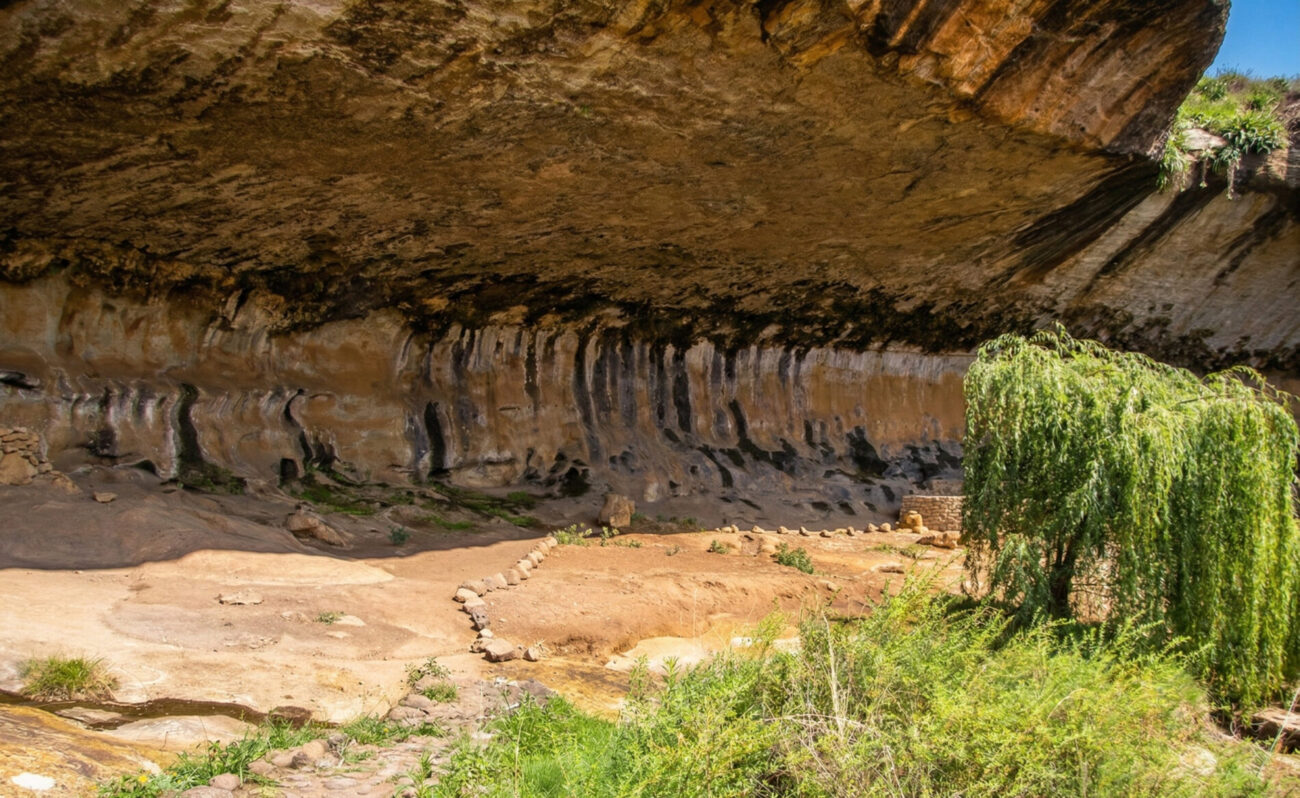
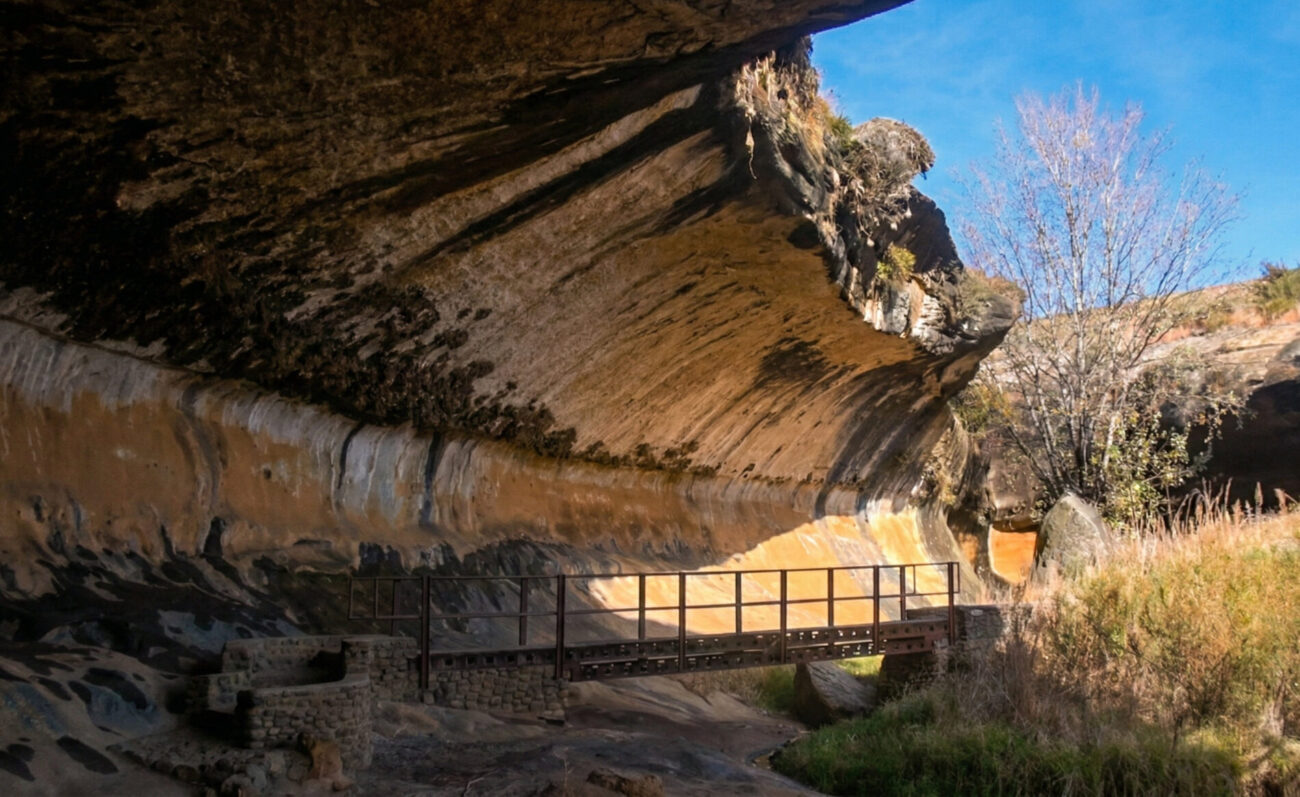
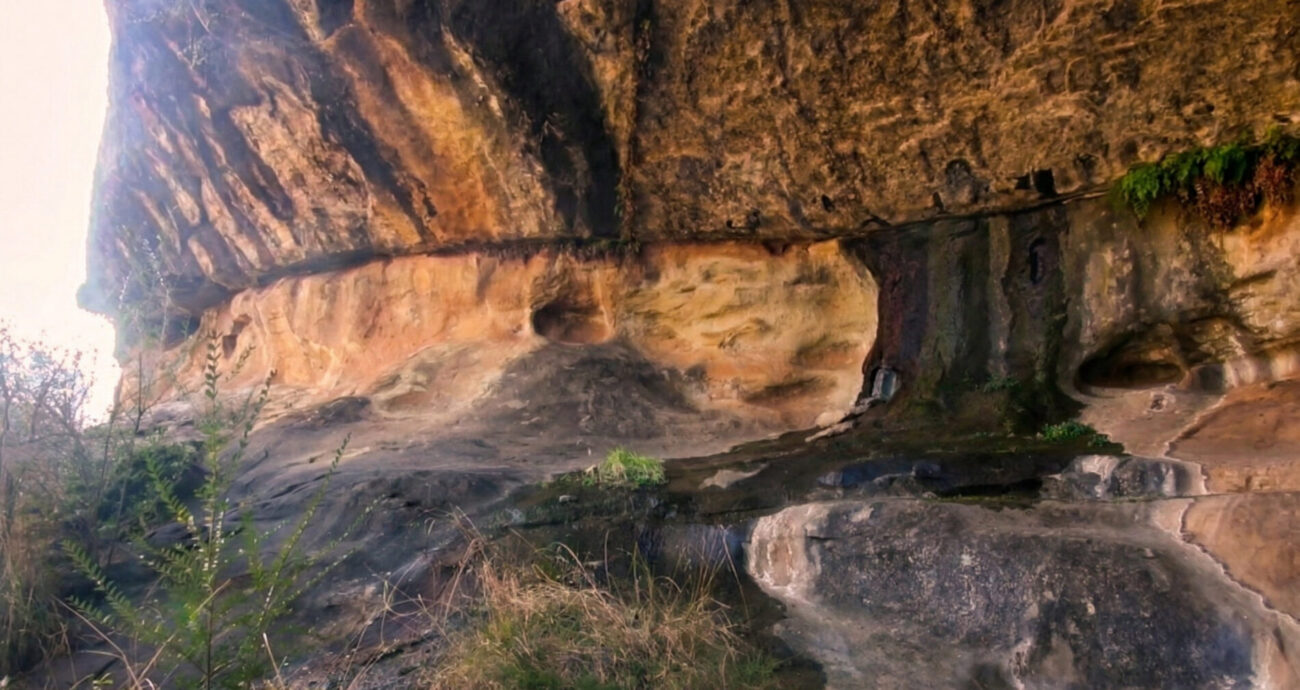
Step out at the top of the approach and the landscape asks for silence, not applause. Guides wrapped in Basotho heritage blankets—worn the way people actually wear them, not the way souvenir shops want you to—gesture toward the Clarens Sandstone overhang. It’s massive, open to the air, and it has that strange cathedral effect where your voice feels like a mistake. You go from high-clearance logistics to a sanctuary that held hunter-gatherers thousands of years ago in about thirty seconds. The transition is the point.
Heritage Overview
The History and The Legends
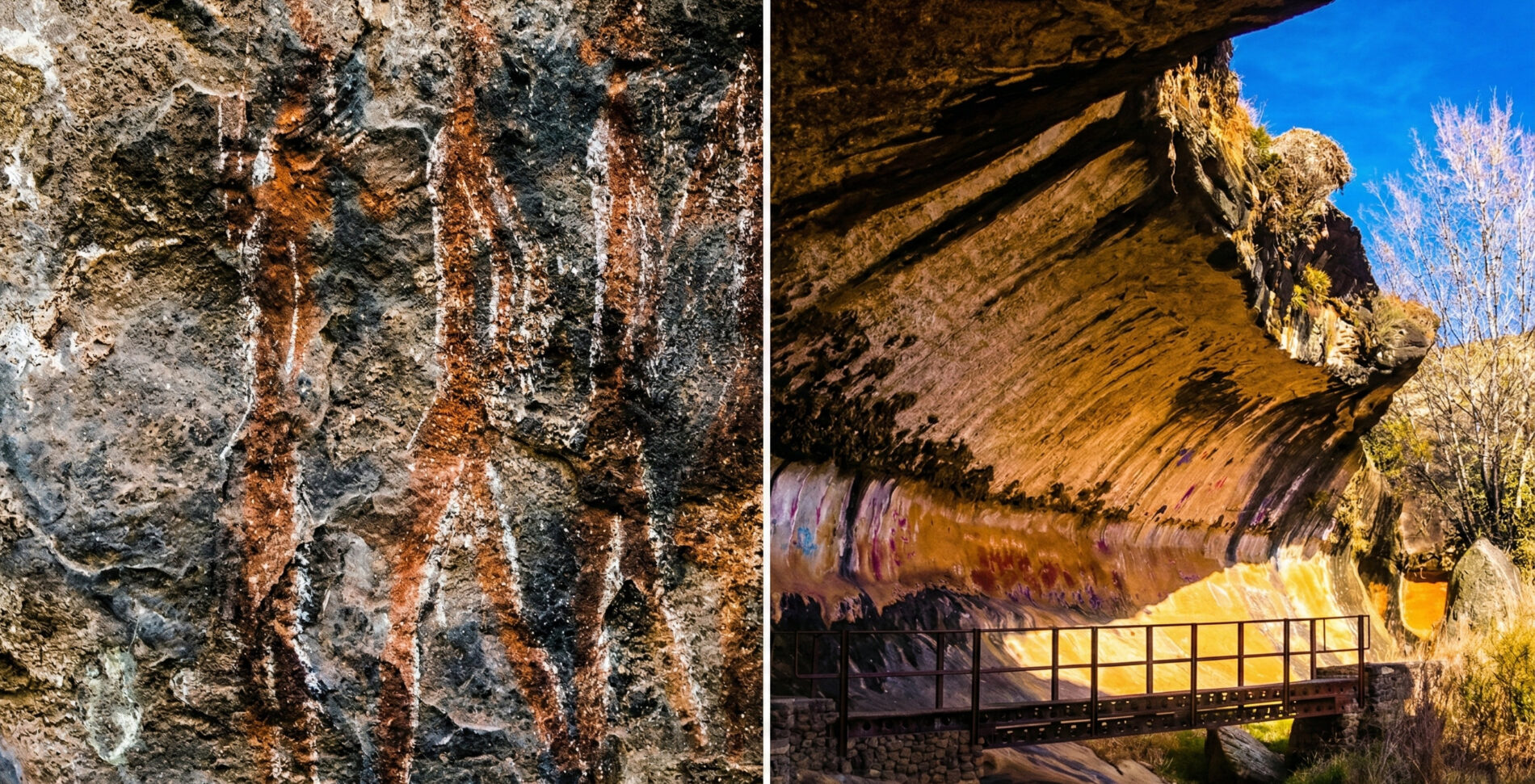
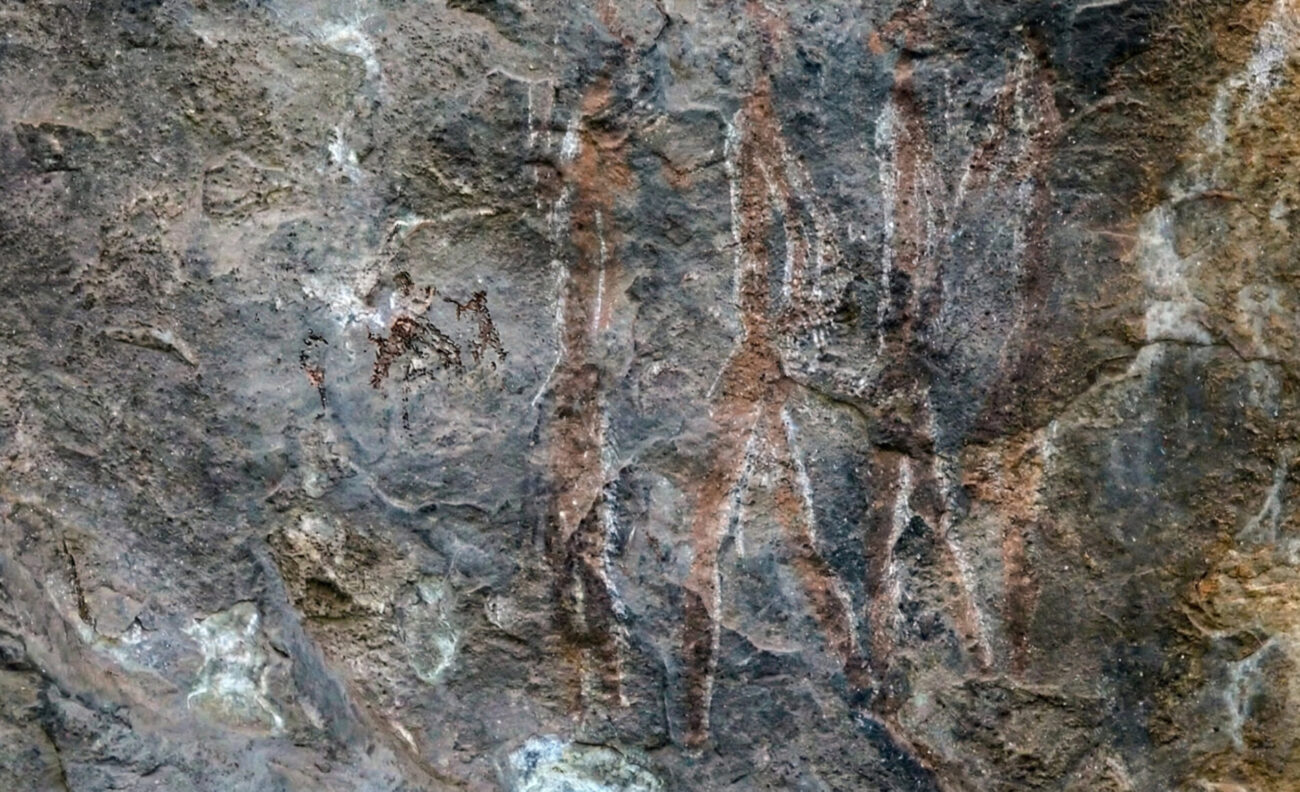
Liphofung translates as “place of the eland,” and that’s not poetic branding. It’s literal. The eland dominates the rock face because it dominated the San imagination: not as a menu item, but as a spiritual battery. The old term you’ll hear in serious interpretations is n/om, a kind of power associated with trance, healing, and rainmaking. The art here isn’t “cute cave drawings.” It’s field notes from altered states—shamans in motion, bodies shifting, animals carrying charge. You can feel the intent even when the pigment has faded to a whisper.
Then the Basotho layer arrives and refuses to be a footnote. In the early 19th century, the overhang becomes strategic terrain, the sort of place a leader uses when the region is unstable and every ridge line has eyes. King Moshoeshoe I is tied to the story as a practical presence: shelter, concealment, regrouping. Today the reserve runs as a community-managed site across roughly 4.5 hectares, which is rare in the way that actually matters—money stays local, and the narrative doesn’t get stripped down into a single, tourist-friendly version.
One misconception keeps popping up, and it’s oddly stubborn: people imagine a dark, claustrophobic cavern that needs headlamps, helmets, maybe a crawl. Wrong place. Liphofung is a huge, sunlit sandstone overhang. Open air. Indigenous plants tucked into cracks. A small natural waterfall nearby when conditions allow. You don’t need spelunking gear. You need attention.
Architectural & Cultural Details
Geologically, the Clarens Sandstone is doing what it does best: sheer faces, carved recesses, and that pale, weathered skin that makes every blanket, every ochre mark, every human figure pop. But the site isn’t just rock and pigment. The adjacent Basotho Cultural Village sits as a functional replica of traditional rondavels, laid out to show how domestic space worked—sleeping, cooking, social rhythm—without turning it into a theme park. You’ll smell the hearths before you see them. You’ll hear the crackle. You’ll see blankets used for warmth and identity in a way that feels bluntly contemporary, because it is.
And yes, the visuals can feel almost too perfect: bright blanket geometry against pale cliff walls, smoke rising in thin streams, mountains pressing close. It’s the kind of scene that gets ruined fast when a group starts treating it like a backdrop for “content.” Don’t be that group.
What to Look For When You Visit
- The main rock-art overhang with dense eland imagery and trance-era human figures.
- The Basotho Cultural Village with rondavel replicas and active cooking hearths.
- The visitor centre and craft shop, where purchases route back into community operations.
- The micro-climate edge: lowland warmth fading into highland wind as the Maluti influence creeps in.
Etiquette and Responsible Tourism
This is where I get a bit strict. The rock art is fragile in a boring, irreversible way. Touching the wall isn’t “minor.” Skin oils and acids degrade pigments over time, and once that damage starts, it doesn’t politely stop. Flash photography is another slow bleed: repeated bursts contribute to pigment fading, especially with natural ochres. Keep your hands to yourself. Keep the flash off. If you want the place to survive, act like it matters.
There’s also the living-culture side, and it’s not optional. You’re stepping into a space where Basotho culture isn’t staged, it’s happening. Ask before photographing people. Greet properly. Tip discretely when a local guide is doing real interpretive work. Respect is not soft. It’s logistics, trust, and not being the tourist everyone remembers for the wrong reason.
Local Etiquette Rule
If you’re coming as a day trip from South Africa via Caledonspoort, travel with a passport that has sufficient blank pages and solid validity remaining. Bring cash for cross-border incidentals and local fees; card acceptance thins quickly once you leave the main corridors. On site: no touching the rock surface, no flash, and don’t treat the cultural village like a costume set.
How to Experience This Responsibly (Tour Options)
Liphofung is one of the rare heritage stops in this region that behaves logistically. It sits just off the A1, with a short access road and paved paths, so self-drivers aren’t signing up for a mechanical endurance test. Budget travelers can make it work with local transport and a bit of patience. Organized day trips exist, and they’re useful if you’re stitching together border timing, Moteng Pass driving, and a tight schedule. The point is less “how fancy is your tour” and more “does your timing respect the terrain.” Terrain doesn’t negotiate.
Archetype 1: The A1 Overland Cultural Transit Tour
Ideal for: Road-trippers, self-drivers, overlanders transiting between the border area, Butha-Buthe, and the Afriski/Oxbow highlands.
Skip this if: You want a long archaeological deep dive; this is a sharp 1–2 hour stop designed to break the drive.
This is the efficient version: park, short guided walk to the overhang, quick circuit through the cultural village, back on the road. Transport tends to be self-drive 4×4 vehicles or small tour vans. It’s a smart reset before or after Moteng Pass. It can also feel rushed if you arrive late and start clock-watching.
Archetype 2: The Deep-Dive Basotho Heritage & History Excursion
Ideal for: Cultural travelers, history obsessives, anyone who wants the San layer explained with actual interpretive care.
Skip this if: You’re chasing adrenaline and want to treat the site as a checkbox between passes.
This is the half-to-full-day version from Butha-Buthe or nearby bases. You slow down. You listen. You spend time on the symbolic language—eland, trance, ritual movement—then step into the Basotho narrative without forcing a neat merger. Cultural performances can be arranged, but they need planning and respect; don’t show up expecting a button to be pressed.
Archetype 3: The Roof of Africa Multi-Day 4×4 Expedition
Ideal for: Overland crews who want high passes, long driving days, and a cultural anchor that keeps the trip from being pure mechanical conquest.
Skip this if: You hate long vehicle hours, get motion sick, or don’t want border logistics shaping your mood.
These itineraries often use Liphofung as an orientation stop before pushing deeper into the highlands—Mokhotlong corridors, remote valleys, sometimes looping toward Sani Pass. The upside is competence: permits, border rhythm, route knowledge. The downside is that culture becomes a brief segment inside a driving-heavy schedule. That’s fine if you admit it to yourself.
Frequently Asked Questions
DIY vs. guided: do I need an expensive tour to visit Liphofung?
No. The site is straightforward for self-drive travelers via a paved approach and managed paths. You pay an entrance fee on arrival, and a local guide is often part of the visit to interpret the rock art and context.
Is Liphofung safe for families, children, or older travelers?
Yes. The walking distance is short, the paths are developed, and railings help near key areas. It’s one of the more accessible heritage stops in the region without feeling sanitized.
What should I pack for the site’s micro-climate?
Bring sunscreen and water, then add a windbreaker and layers even when the lowlands feel warm. This is a climate edge: mountain air can turn sharp fast, and the wind has a nasty habit of showing up uninvited.
Can I buy a full meal on site?
Don’t count on it. You’ll find basic snacks and small-shop options, but proper meals are better planned in nearby towns. If you want lunch to be a certainty, bring it.
Why is the eland so dominant in the rock art?
Because for the San, the eland carried spiritual charge—n/om in the old terminology—and trance work often focused on harnessing that power for healing and rain. The eland isn’t decoration. It’s a key.
Preserving the Kingdom in the Sky
Liphofung works because it refuses to be one thing. It’s rock art and nation-building memory. It’s a community-run site with real operational needs—maintenance, staffing, interpretation—plus a fragile archive that can be damaged by one careless hand. When you leave, the painted eland stays behind, doing what it has always done: holding attention, asking for restraint, outlasting the noise.
Support the community-run model when you can. Move quietly. Spend money where it lands locally. And for the love of all that is decent, keep your fingers off the wall. The stone doesn’t need your touch to speak.


